
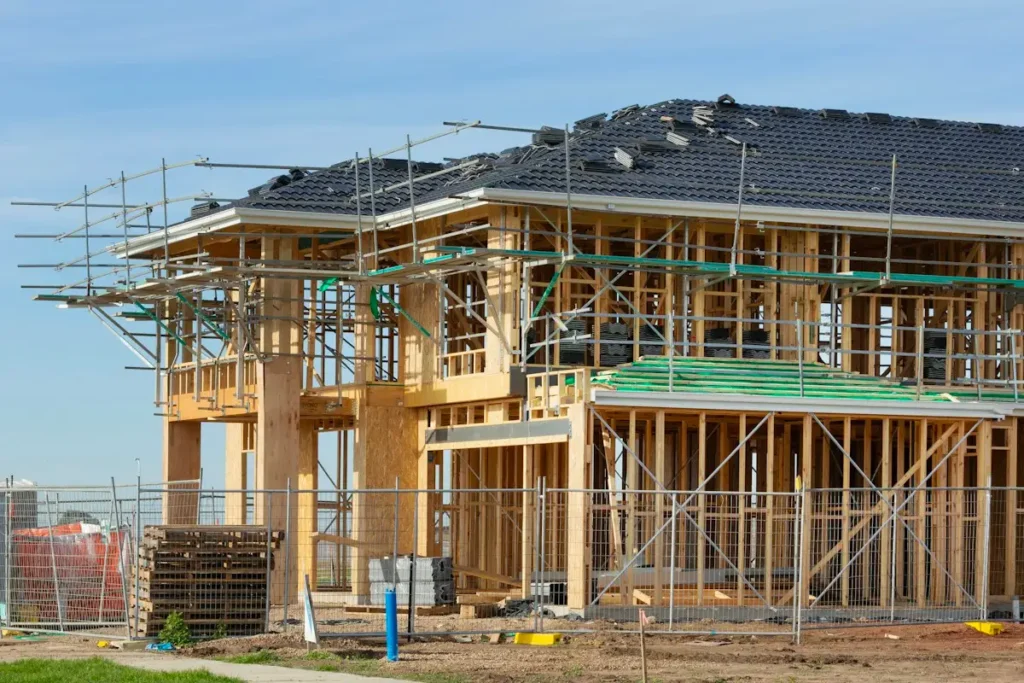
Bathla Group, one of Sydney’s largest residential developers, entered voluntary administration in late August 2026 with about $3.4 billion of known creditor claims. The NSW Supreme Court has given the administrators until September 2027, so creditors and buyers face a long wait. The effects on private credit, construction and housing supply will be felt well beyond Western Sydney.
What happened
On 25 August 2026, Teneo was appointed voluntary administrator to the group’s main companies, Universal Property Group and Raj & Jai Construction. The group operates through hundreds of project companies.
Managing director Bhart Bhushan blamed softening sales, the May federal Budget, falling confidence and construction cost increases the group had absorbed.
At the first creditors’ meeting on 4 September, the administrators reported known claims of about $3.4 billion:
- about $3.08 billion owed to secured lenders;
- $145 million owed to the Australian Taxation Office; and
- about $130 million owed to other unsecured creditors.
They gave a preliminary value of about $4.9 billion for 219 projects. That is not cash, and much depends on completing and selling the projects.
In September, the NSW Supreme Court extended the deadline for the second creditors’ meeting to 13 September 2027. The administrators reported about $736 million of possibly overstated inter-company balances and bank accounts that had not been reconciled for some time. Construction on the remaining sites stopped in late September, and some lenders have appointed receivers.
Why a year-long administration matters
A second creditors’ meeting is usually held about five weeks after appointment. A 12-month extension under section 439A(6) of the Corporations Act 2001 (Cth) is rare, and reflects the group’s scale.
While the administration continues, claims against the companies are frozen without the administrators’ consent or the court’s leave (s 440D). Secured lenders over all or substantially all of a company’s property had a short window to enforce (s 441A). Others now act project by project, through receivers or sales.
What creditors and buyers should do now
Unsecured creditors and subcontractors
- Lodge a proof of debt with the administrators and keep receiving reports.
- Check whether any supply was on retention of title terms registered on the PPSR.
- Check for personal or parent company guarantees supporting your debt.
- If you were paid by a Bathla company in the six months before 25 August, keep your records: if the companies are later wound up, a liquidator may seek to recover those payments as unfair preferences.
- Before doing more work, confirm whether the administrators, a receiver or a new builder is engaging you, and who will pay.
Off-the-plan buyers
- The administration does not end your contract. The ipso facto stay (s 451E) generally prevents a contract being ended only because of the administration.
- In NSW, a developer can only rescind a residential off-the-plan contract under a sunset clause with the buyer’s written consent or a court order (Conveyancing Act 1919 (NSW) s 66ZS).
- Check where your deposit is held, whether home building compensation cover applies, and what a lower valuation at settlement would mean for your finance.
Our guides to voluntary administration, debt recovery and construction insolvency explain the process in more detail.
Flow-on effects for the wider industry
Private credit. About 40 private credit funds reportedly lent to the group, and several funds have restricted investor withdrawals. ASIC’s November 2025 private credit report (REP 820) had already criticised valuation practices for construction loans. Expect closer scrutiny of valuations, lower loan-to-value ratios, higher pre-sale requirements and dearer finance for mid-tier developers.
Contractors and suppliers. Construction remains the industry hardest hit by insolvency. ASIC reports 14,152 companies entered external administration in 2025–26, about a quarter of them in construction. Large builder failures, such as Probuild in 2022 and Porter Davis in 2023, showed how unpaid trades can trigger a second wave of collapses.
Regulation. Building Commission NSW had carried out more than 40 inspections of Bathla sites before the collapse. Tighter quality controls and insurance requirements add cost for developers already under margin pressure.
Property prices: two forces pulling in opposite directions
In the short term, downward pressure. The market was already falling. Cotality’s index fell 1.1% nationally in September, the sixth consecutive monthly fall, and Sydney values are 8.6% below their February peak. Receivers selling completed Bathla stock add supply in affected Western Sydney corridors. Buyers who settle on off-the-plan contracts may also face valuations below the contract price.
The wider causes are interest rates, affordability and the Budget changes to negative gearing and capital gains tax for established dwellings, which start on 1 July 2027. New builds keep the existing concessions.
In the medium term, supply shortfalls. Bathla’s stalled pipeline of about 14,000 apartments has been reported as roughly 18.5% of new housing expected in NSW this year. If construction finance tightens across the sector, fewer projects start. When demand recovers, that shortfall is likely to support prices for new housing, particularly in Western Sydney, and make affordability harder rather than easier.
For investors, distressed sales by receivers may create opportunities. Our guide to distressed acquisitions explains how these sales work.
What to watch
- Lender funding decisions and receiverships, project by project.
- The administrators’ investigations and reports to creditors.
- ASIC action on private credit valuations and liquidity.
- Monthly price indices and NSW dwelling approvals and commencements.
To discuss how these developments affect you, contact us on +61 7 3229 9800 or send us an enquiry online.
This article is general information only and is not legal advice.
Sources: ABC News, “Major NSW property developer Bathla Group enters administration” (25 August 2026); Bathla Group, “Bathla update August 2026”; ABC News, “Bathla Group reveals $3.4b debt as administrators warn some work could halt” (4 September 2026); ABC News, “Inside the mammoth task that could keep Bathla in administration for another year” (19 September 2026); Business News Australia, “Court extends Bathla Group administration until September next year”; The Urban Developer, “Bathla’s $3.4b collapse enters new phase as construction shuts down”; ABC News, “Bathla’s collapse exposes many issues in Australia’s housing industry” (7 September 2026); ASIC, REP 820 Private credit surveillance (November 2025); Accountants Daily, “Company insolvencies climb to 14,152 for FY2025–26” (ASIC data); Cotality, “Australian housing values down for sixth straight month in September”; Australian Government, Budget 2026–27 negative gearing and capital gains tax explainer; Corporations Act 2001 (Cth) ss 439A, 440D, 441A, 451E; Conveyancing Act 1919 (NSW) s 66ZS.